


What are the electrical conductivity properties of aluminum threshold profiles?
Oct 29, 2025
Leave a message
Hey there! As a supplier of aluminum threshold profiles, I often get asked about the electrical conductivity properties of these products. Today, I'm gonna break it down for you and share some insights that I've gathered over the years in the business.
Firstly, let's talk about what electrical conductivity is. Simply put, it's a material's ability to conduct an electric current. Metals are generally good conductors, and aluminum is no exception. Aluminum threshold profiles have some pretty interesting electrical conductivity properties that make them useful in a variety of applications.
One of the key things about aluminum is its relatively high electrical conductivity. It's not as conductive as copper, which is often considered the gold - standard for electrical conductivity in metals. But compared to many other common metals, aluminum holds its own. The electrical conductivity of aluminum is about 61% of that of copper. This means that it can still allow a significant amount of electric current to flow through it.

The reason behind aluminum's conductivity lies in its atomic structure. Aluminum atoms have three valence electrons that are relatively free to move around. When an electric field is applied, these electrons can easily flow through the metal lattice, creating an electric current. This property makes aluminum threshold profiles suitable for applications where electrical conductivity is required, such as in some electrical enclosures or grounding systems.
Another important aspect is the effect of impurities and alloying on the electrical conductivity of aluminum threshold profiles. Pure aluminum has the highest conductivity. However, in real - world applications, we often use aluminum alloys to enhance other properties like strength and corrosion resistance. When other elements are added to form an alloy, the electrical conductivity can be affected. For example, adding elements like magnesium, silicon, or copper can change the crystal structure of the aluminum, which in turn can reduce the mobility of the electrons and thus decrease the electrical conductivity. But manufacturers can carefully control the alloy composition to balance between the desired mechanical properties and acceptable levels of electrical conductivity.
Now, let's consider the practical implications of these electrical conductivity properties. In the construction industry, aluminum threshold profiles are widely used. While their primary function might be to provide a smooth transition between different floor surfaces, in some cases, their electrical conductivity can be an added bonus. For instance, in buildings with sensitive electrical equipment, proper grounding is crucial to prevent electrical shocks and damage from static electricity. Aluminum threshold profiles can be part of the grounding system, helping to safely dissipate electrical charges.
In the electronics industry, aluminum threshold profiles can also find applications. They can be used in the frames of electronic devices. The electrical conductivity can help in shielding the internal components from electromagnetic interference (EMI). The conductive nature of aluminum allows it to act as a Faraday cage, redirecting the electromagnetic waves around the device and protecting the sensitive electronics inside.
When it comes to our specific aluminum threshold profiles, we offer a range of products with different alloy compositions to meet various customer needs. If you need a profile with high electrical conductivity, we can recommend alloys that are closer to pure aluminum. On the other hand, if you need a profile with better strength and corrosion resistance, we have alloys that can offer those properties while still maintaining a reasonable level of electrical conductivity.
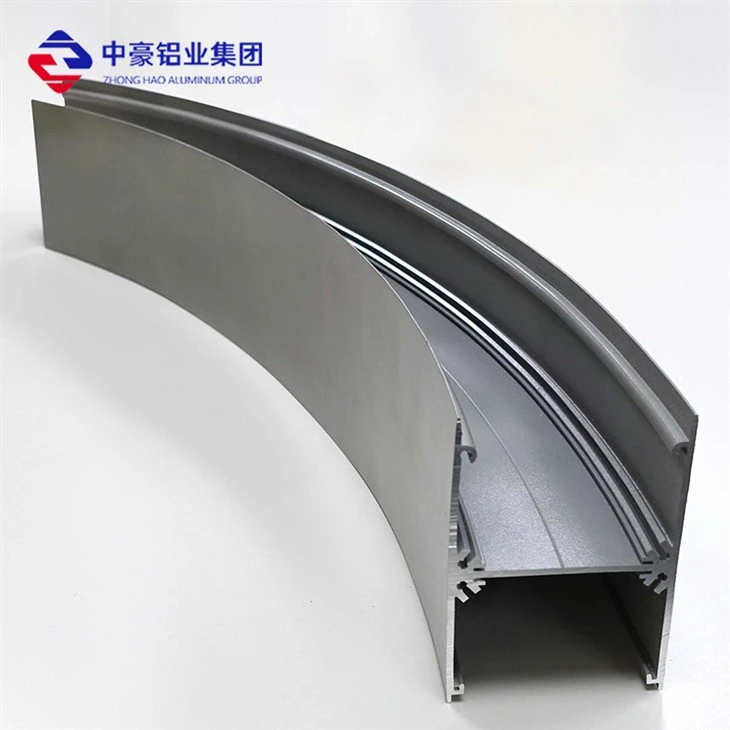
Now, I'd like to mention some of our other related products. We have Curved Aluminium Extrusion, which can be used in more decorative or complex architectural designs. These curved profiles also inherit the electrical conductivity properties of aluminum, and they can be used in applications where both form and some electrical functionality are required.
We also offer 10mm T - slot Extrusion. These profiles are very versatile and can be used in building modular structures. Their electrical conductivity can be useful in cases where the structure needs to be grounded or when there are electrical components integrated into the structure.
And don't forget about our Square Aluminum Profile. These profiles are commonly used in framing and support structures. The electrical conductivity can be an advantage in applications where electrical signals need to be transmitted or where grounding is necessary.
If you're in the market for aluminum threshold profiles or any of our other related products, I encourage you to reach out for a consultation. Whether you're working on a small DIY project or a large - scale commercial construction, we can help you find the right product with the appropriate electrical conductivity and other properties. We have a team of experts who can answer all your questions and guide you through the selection process. So, don't hesitate to get in touch if you have any needs or just want to learn more about our products.
In conclusion, the electrical conductivity properties of aluminum threshold profiles are an important characteristic that offers a range of benefits in different industries. From their ability to conduct electricity due to the free - moving electrons in their atomic structure to the impact of alloying on conductivity, there's a lot to consider. And with our diverse product range, we're well - positioned to meet the various requirements of our customers. So, if you're looking for high - quality aluminum threshold profiles, give us a shout!
References:
- "Aluminum: Properties and Physical Metallurgy" by John E. Hatch
- "Electrical Conductivity of Metals" - Various research papers from materials science journals
Send Inquiry