


What is the heat transfer coefficient of heatsink extrusion profiles?
Aug 27, 2025
Leave a message
What is the heat transfer coefficient of heatsink extrusion profiles?
As a supplier of heatsink extrusion profiles, I've often been asked about the heat transfer coefficient of these essential components. In this blog, I'll delve into what the heat transfer coefficient is, how it relates to heatsink extrusion profiles, and why it matters in various applications.
Understanding the Heat Transfer Coefficient
The heat transfer coefficient, often denoted as 'h', is a measure of the ability of a material or a surface to transfer heat between a solid surface and a fluid (such as air or water). It represents the amount of heat that is transferred per unit area per unit temperature difference between the surface and the fluid. The unit of the heat transfer coefficient is typically W/(m²·K) in the SI system.

Mathematically, the heat transfer rate (Q) between a surface and a fluid can be calculated using Newton's law of cooling:
Q = h × A × ΔT
Where:
- Q is the heat transfer rate in watts (W).
- h is the heat transfer coefficient in W/(m²·K).
- A is the surface area of the heat transfer surface in square meters (m²).
- ΔT is the temperature difference between the surface and the fluid in Kelvin (K).
A higher heat transfer coefficient means that more heat can be transferred for a given surface area and temperature difference. This is crucial in applications where efficient heat dissipation is required, such as in electronics, automotive, and industrial equipment.
Heat Transfer Coefficient of Heatsink Extrusion Profiles
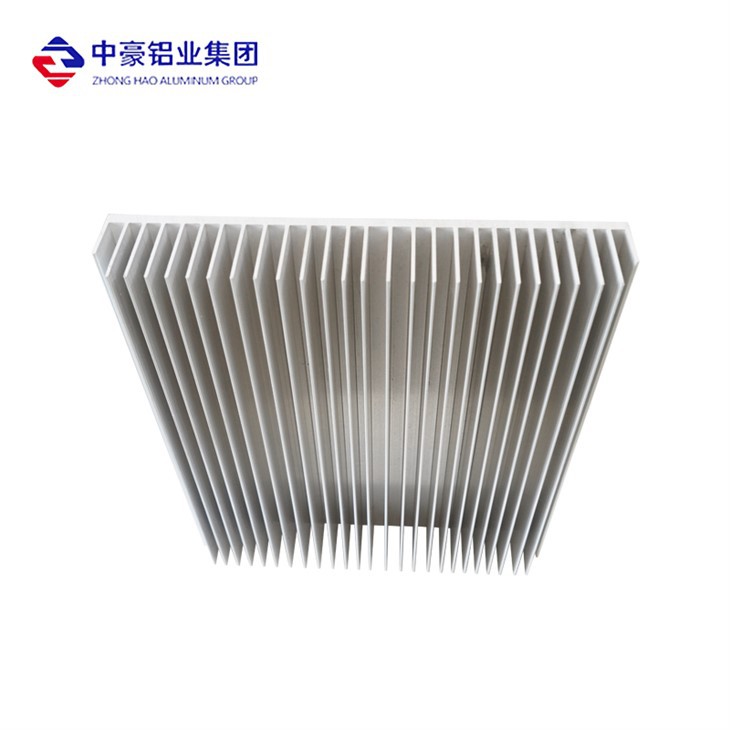
Heatsink extrusion profiles are commonly made of materials like aluminum due to its excellent thermal conductivity and relatively low cost. The heat transfer coefficient of heatsink extrusion profiles depends on several factors:
Material Properties
The thermal conductivity of the material used in the heatsink plays a significant role in determining the heat transfer coefficient. Aluminum, for example, has a thermal conductivity of around 200 - 240 W/(m·K), which allows it to conduct heat efficiently from the heat source to the fins of the heatsink.
Fin Design
The design of the fins on the heatsink extrusion profiles is another critical factor. Fins increase the surface area available for heat transfer, which in turn can increase the overall heat transfer rate. The shape, size, and spacing of the fins can affect the flow of the fluid (usually air) around the heatsink and thus impact the heat transfer coefficient. For example, fins with a larger surface area and a more streamlined shape can promote better airflow and higher heat transfer coefficients.
Fluid Flow Conditions
The type of fluid flow (laminar or turbulent) and the velocity of the fluid around the heatsink also influence the heat transfer coefficient. Turbulent flow generally results in a higher heat transfer coefficient compared to laminar flow because it enhances the mixing of the fluid near the surface of the heatsink. Increasing the fluid velocity can also increase the heat transfer coefficient, but there is a limit beyond which the increase in power consumption to drive the fluid may outweigh the benefits of the increased heat transfer.
Measuring the Heat Transfer Coefficient
There are several methods to measure the heat transfer coefficient of heatsink extrusion profiles:
Experimental Methods
One common experimental method is to use a test rig where the heatsink is heated to a known temperature and then exposed to a fluid flow. The heat transfer rate is measured by monitoring the temperature change of the heatsink and the fluid, and the heat transfer coefficient is calculated using the equation mentioned earlier. This method provides real - world data but can be time - consuming and expensive.
Computational Fluid Dynamics (CFD)
CFD is a numerical simulation technique that can be used to predict the heat transfer coefficient of heatsink extrusion profiles. By creating a virtual model of the heatsink and the fluid flow around it, CFD software can calculate the temperature distribution, fluid flow patterns, and heat transfer rates. CFD allows for the evaluation of different heatsink designs and operating conditions without the need for physical prototypes, saving time and cost in the design process.
Importance of the Heat Transfer Coefficient in Applications
The heat transfer coefficient of heatsink extrusion profiles is of utmost importance in various applications:
Electronics Cooling
In electronic devices such as computers, smartphones, and LED lights, efficient heat dissipation is essential to prevent overheating and ensure the proper functioning and longevity of the components. A heatsink with a high heat transfer coefficient can effectively transfer the heat generated by the electronic components to the surrounding air, keeping the device at a safe operating temperature.
Automotive Industry
In automotive applications, heatsinks are used in engines, power electronics, and lighting systems. The ability of the heatsink to transfer heat efficiently can improve the performance and reliability of these systems. For example, in electric vehicles, the cooling of the battery management system and power electronics is crucial for the overall efficiency and safety of the vehicle.
Industrial Equipment
Industrial equipment such as motors, generators, and control panels often generate a significant amount of heat. Heatsink extrusion profiles with high heat transfer coefficients are used to dissipate this heat and prevent damage to the equipment. This helps to maintain the productivity and reliability of the industrial processes.
Our Heatsink Extrusion Profiles
As a supplier of Heatsink Extrusion Profiles, we take pride in offering high - quality products with optimized heat transfer coefficients. Our profiles are made from high - grade aluminum materials and are designed with advanced fin geometries to ensure maximum heat dissipation.
We also offer customization services to meet the specific requirements of our customers. Whether you need a heatsink for a small electronic device or a large industrial application, our team of experts can work with you to design and manufacture the ideal solution.
In addition to heatsink extrusion profiles, we also supply Aluminum Wind Turbine Blades and Heat Sink Profile, which are all designed with a focus on thermal performance and durability.
Contact Us for Procurement
If you are in the market for high - quality heatsink extrusion profiles or other related products, we invite you to contact us for procurement discussions. Our team is ready to assist you in finding the best solutions for your heat dissipation needs. Whether you have a specific design in mind or need advice on the most suitable product for your application, we are here to help.
References
- Incropera, F. P., DeWitt, D. P., Bergman, T. L., & Lavine, A. S. (2007). Fundamentals of Heat and Mass Transfer. John Wiley & Sons.
- Holman, J. P. (2010). Heat Transfer. McGraw - Hill.
Send Inquiry