


What is the role of heat sink profile in solar panel cooling?
Nov 05, 2025
Leave a message
In the realm of renewable energy, solar panels stand as a cornerstone technology, harnessing the sun's power to generate electricity. However, one of the persistent challenges in solar panel efficiency is heat management. As solar panels absorb sunlight and convert it into electrical energy, a significant amount of heat is generated. Excessive heat can lead to a decrease in the panel's efficiency and potentially shorten its lifespan. This is where heat sink profiles come into play, offering a solution to effectively dissipate heat and maintain optimal operating conditions for solar panels.
The Science Behind Solar Panel Heating
To understand the role of heat sink profiles in solar panel cooling, it's essential to first grasp the process of solar panel heating. Solar panels are made up of photovoltaic (PV) cells that absorb photons from sunlight. These photons knock electrons loose from atoms, creating an electric current. However, not all of the sunlight's energy is converted into electricity. A substantial portion is transformed into heat.
The efficiency of a solar panel is inversely proportional to its temperature. As the temperature of a PV cell rises, its electrical output decreases. This is due to the increased resistance within the cell, which reduces the flow of electrons. For every degree Celsius increase in temperature above the standard test condition (usually around 25°C), the efficiency of a typical crystalline silicon solar panel can drop by approximately 0.3% to 0.5%. Over time, high temperatures can also cause physical degradation of the panel's materials, leading to a shorter lifespan.
How Heat Sink Profiles Work
Heat sink profiles are designed to increase the surface area available for heat transfer. They are typically made of materials with high thermal conductivity, such as aluminum. Aluminum is a popular choice due to its relatively low cost, lightweight nature, and excellent heat dissipation properties.
When a heat sink profile is attached to a solar panel, it absorbs the heat generated by the PV cells. The heat is then transferred from the base of the heat sink to its fins or other extended surfaces. The increased surface area allows for more efficient heat transfer to the surrounding air through convection. Convection is the process by which heat is transferred through the movement of a fluid (in this case, air). As the air near the heat sink heats up, it rises, creating a natural airflow that carries the heat away from the solar panel.
Benefits of Using Heat Sink Profiles in Solar Panels
Improved Efficiency
By reducing the operating temperature of solar panels, heat sink profiles can significantly improve their efficiency. This means that more sunlight is converted into electricity, resulting in higher energy output. For large-scale solar power plants, even a small increase in efficiency can translate into a substantial increase in overall energy production and revenue.
Extended Lifespan
High temperatures can accelerate the degradation of solar panel materials, such as the encapsulation layer and the PV cells themselves. By keeping the temperature in check, heat sink profiles can help extend the lifespan of solar panels. This reduces the need for frequent replacements, saving both time and money in the long run.
Reliability
Solar panels are often installed in harsh environments, where they are exposed to extreme temperatures, humidity, and other environmental factors. Heat sink profiles can enhance the reliability of solar panels by protecting them from the damaging effects of heat. This ensures a more stable and consistent energy supply.
Types of Heat Sink Profiles for Solar Panels
Extruded Heat Sink Profiles
Extruded heat sink profiles are one of the most common types used in solar panel cooling. They are manufactured by forcing a heated aluminum alloy through a die to create a specific shape. This process allows for the production of heat sinks with complex geometries, such as fins of various sizes and shapes. Extruded heat sink profiles offer high thermal performance and can be customized to meet the specific requirements of different solar panel designs. You can find a wide range of Heatsink Extrusion Profiles on our website.

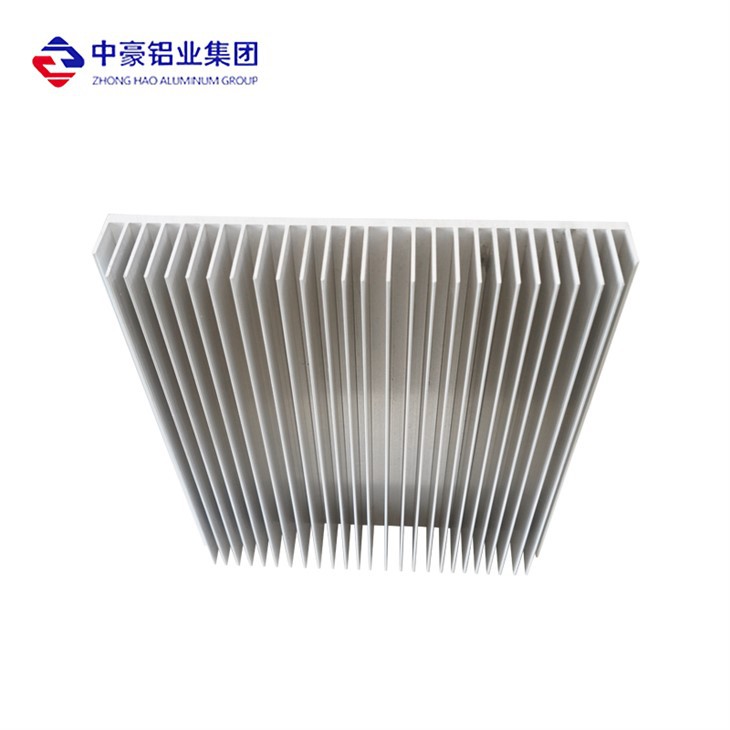
Bonded Fin Heat Sink Profiles
Bonded fin heat sink profiles consist of a base plate with fins that are bonded to it. This type of heat sink is suitable for applications where high thermal performance is required, but the design constraints limit the use of extruded heat sinks. The fins are typically made of thin aluminum sheets and are bonded to the base plate using a high-temperature adhesive or a mechanical bonding process. Bonded fin heat sink profiles can provide excellent heat dissipation capabilities, especially in applications with limited space.
Skived Fin Heat Sink Profiles
Skived fin heat sink profiles are created by machining fins from a solid block of aluminum. This process results in fins that are integral to the base plate, providing a high degree of thermal conductivity. Skived fin heat sink profiles are known for their high aspect ratio fins, which offer a large surface area for heat transfer. They are often used in high-power solar panel applications where efficient heat dissipation is critical.
Factors to Consider When Choosing Heat Sink Profiles for Solar Panels
Thermal Conductivity
The thermal conductivity of the heat sink material is a crucial factor in determining its effectiveness. Higher thermal conductivity means that heat can be transferred more quickly from the solar panel to the heat sink and then to the surrounding air. As mentioned earlier, aluminum is a popular choice due to its relatively high thermal conductivity.
Surface Area
The surface area of the heat sink profile directly affects its heat dissipation capabilities. A larger surface area allows for more efficient heat transfer through convection. When choosing a heat sink profile, it's important to consider the available space on the solar panel and select a profile with an appropriate surface area.
Design and Compatibility
The design of the heat sink profile should be compatible with the solar panel's structure and mounting requirements. It should be easy to install and securely attach to the panel. Additionally, the heat sink profile should not interfere with the electrical connections or other components of the solar panel.
Cost
Cost is always a consideration in any solar panel installation. While high-performance heat sink profiles may offer better thermal performance, they may also come at a higher cost. It's important to balance the cost with the expected benefits in terms of efficiency and lifespan extension.
Our Offerings as a Heat Sink Profile Supplier
As a leading supplier of heat sink profiles, we offer a wide range of products designed specifically for solar panel cooling. Our Heat Sink Profile products are made from high-quality aluminum alloys, ensuring excellent thermal conductivity and durability.
We understand that every solar panel application is unique, which is why we offer customization services. Our team of experts can work with you to design and manufacture heat sink profiles that meet your specific requirements. Whether you need a standard extruded heat sink or a custom-designed bonded fin heat sink, we have the capabilities to deliver.
In addition to heat sink profiles, we also offer Aluminum Alloy Square Tube products that can be used in the construction of solar panel mounting structures. Our aluminum alloy square tubes are lightweight, strong, and corrosion-resistant, making them an ideal choice for outdoor applications.
Contact Us for Procurement and洽谈
If you are interested in our heat sink profiles or other aluminum profile products for your solar panel projects, we encourage you to contact us for procurement and further discussion. Our sales team is ready to assist you with product selection, customization, and pricing. We are committed to providing high-quality products and excellent customer service to help you achieve your solar energy goals.
References
- Duffie, J. A., & Beckman, W. A. (2013). Solar Engineering of Thermal Processes. John Wiley & Sons.
- Chow, T. T. (2010). Solar Thermal Energy Systems: Design and Analysis. Springer.
- Khatib, T., & Sopian, K. (2012). Cooling techniques for photovoltaic panels: A review. Renewable and Sustainable Energy Reviews, 16(3), 1821-1828.
Send Inquiry